How a three-layer air and water cooling cover lets the optics work in a furnace at up to 2000°C.
Place 1.mp4 in the site root to play the video here.
The probe survives extreme heat because of a three-layer protective cover that combines circulating water and compressed air.
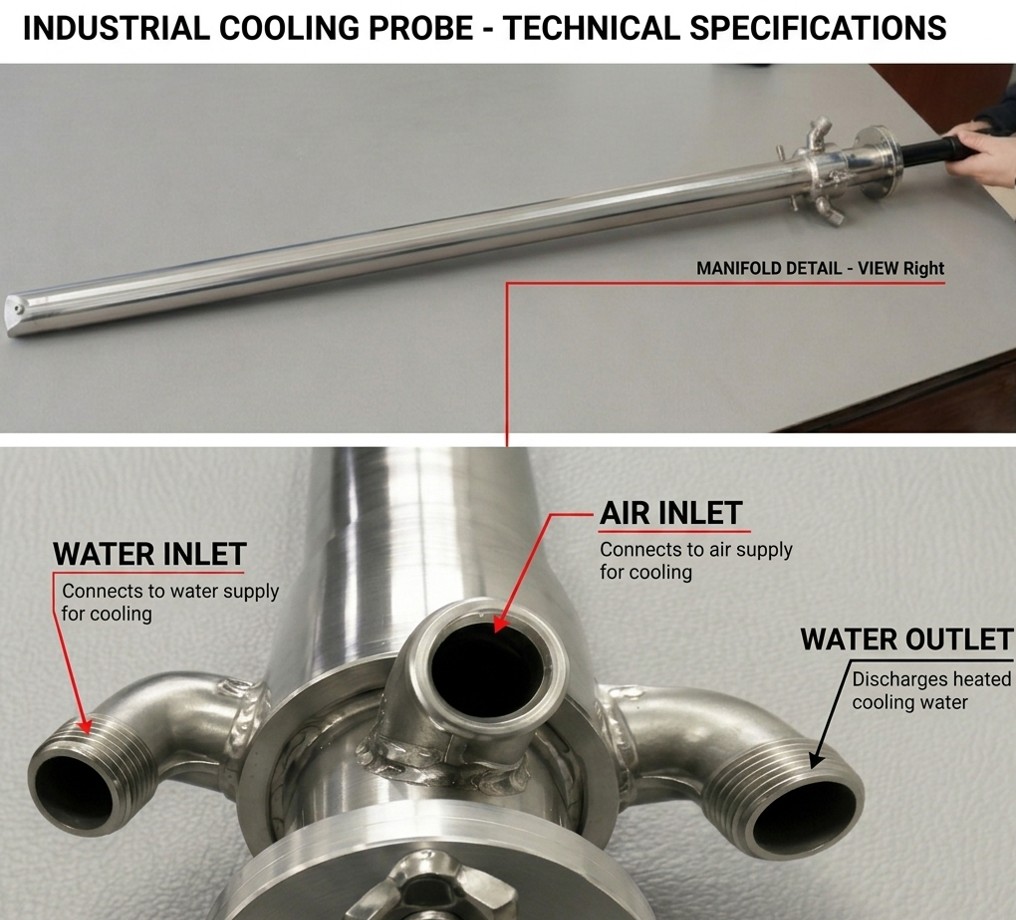
Water removes radiant heat from the outside while compressed air cools the optics inside and forms a protective curtain at the pinhole.

Circulating water on the outer layers carries away radiant furnace heat.
Compressed air on the inner layer force-cools the camera and lens.
Air sprays out at the pinhole, keeping dust and hot particles off the lens.
Cooling water fills the protective cover and absorbs radiant heat.
Water flows out through the outer layer, carrying heat away.
Compressed air on the inner layer cools the lens and camera.
Air blows out of the pinhole to protect and clean the lens.
0.3 MPa · ≥ 0.3 m³/min · instrument air, ≤ 35 °C.
0.1–0.4 MPa differential · ≥ 30 L/min · ≤ 35 °C.
Clean instrument air keeps the lens clear; soft / demineralised water is recommended.
Cooling must run continuously while the probe is in the furnace.
Tell us your furnace temperature and available air / water supply — we will confirm the right cooling configuration.