Watch the burning zone, coating and refractory brick of a rotary kiln through the kiln hood — spot a red spot or lost coating before it forces a stop.
Place 1.mp4 in the site root to play the inspection video here.
A cement rotary kiln burns clinker continuously at around 1450°C. Coating and refractory brick in the burning zone protect the shell, and losing them risks a red spot, brick fall and an emergency stop.
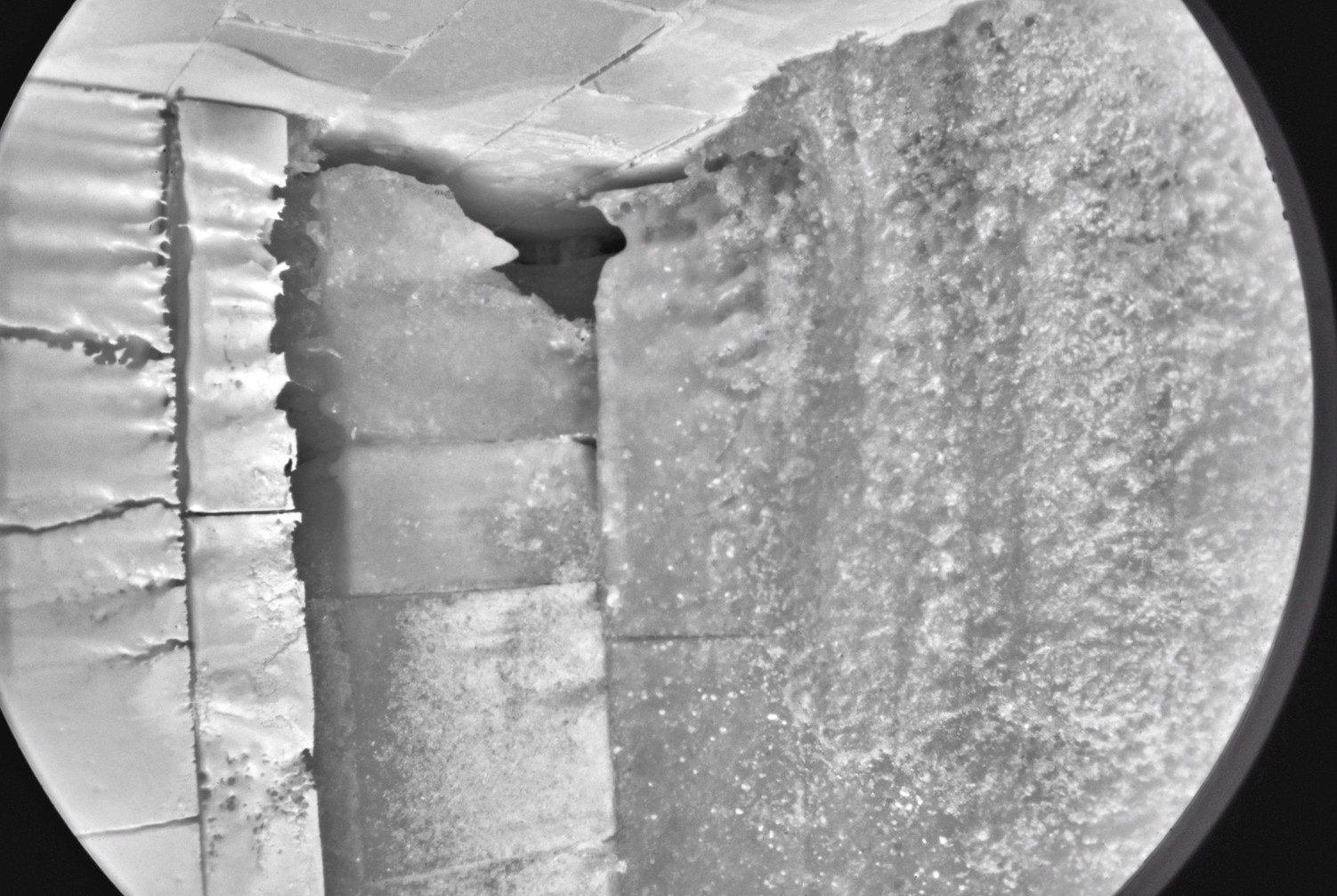
Our high temperature endoscope looks down the kiln from the hood while it runs — checking flame, coating, brick line and clinker without stopping the kiln.


The burning zone is exposed to:
An unplanned kiln stop costs days of production. Live inspection of coating and brick condition lets you adjust the flame and plan brick changes before the shell is at risk.
Stability, thickness and loss of coating in the burning zone.
Brick wear, thinning and loss along the kiln line.
Flame shape, length and burner alignment.
Clinker formation, nodulisation and bed behaviour.
Ring and ball formation that restricts the kiln.
Local thin areas and abnormal shell temperature zones.
Coating and brick where clinker forms — the critical area.
Hood refractory and the kiln inlet view.
Burner nozzle condition and flame position.
Brick condition before and after the burning zone.
Refractory and build-up in the calciner area.
Inlet refractory and clinker bed at the cooler.
Use the kiln hood or an existing port and prepare the insertion point.
Guide the cooled probe toward the burning zone.
View coating, brick line and flame in real time.
Record images and video of coating loss or thin brick.
Provide references for flame tuning and brick planning.
Tell us your kiln size, hood access and the zone you need to observe — we'll recommend the right probe configuration.